Educational Technology
Math Pathways & Pitfalls: Capturing What Works for Anytime Anyplace Professional Development
Training Teachers in the Effective Mathematical and Pedagogical Uses of Software: Perspectives from the Dynamic Number and Dynamic Geometry in Classrooms Projects
This presentation explores technology training in relation to two DR K-12 projects with a focus on increasing the mathematical and pedagogical content knowledge of teachers.
How can professional development that is focused on technology move beyond the nuts and bolts of the particular tool to a deeper look into the mathematical and pedagogical opportunities afforded by the technology? This presentation explores technology training in relation to two DR K–12 projects with a focus on increasing the mathematical and pedagogical content knowledge of teachers.
Multimedia Design Process: How to Make the Bad Stuff Good
Participants will learn how designers work through early versions of games to arrive at final products. As part of the workshop, participants will review and critique early prototypes of work in progress to the final version.
As educators, you may be skilled at identifying a really good educational product. You can review an educational game and, based on observation and testing (or your own developed intuition), you can know if it is effective and engaging. The more difficult task includes learning how to develop a multimedia product—reviewing early prototypes of a game or animation, and changing it many times so that it meets the learning goals while also engaging potential students. This process often involves dumping many unsuccessful attempts as well as starting over.
Interactive Visualizations, Simulations, and Games for Science and Math Learning: Comparing Goals, Affordances, and Challenges across Approaches
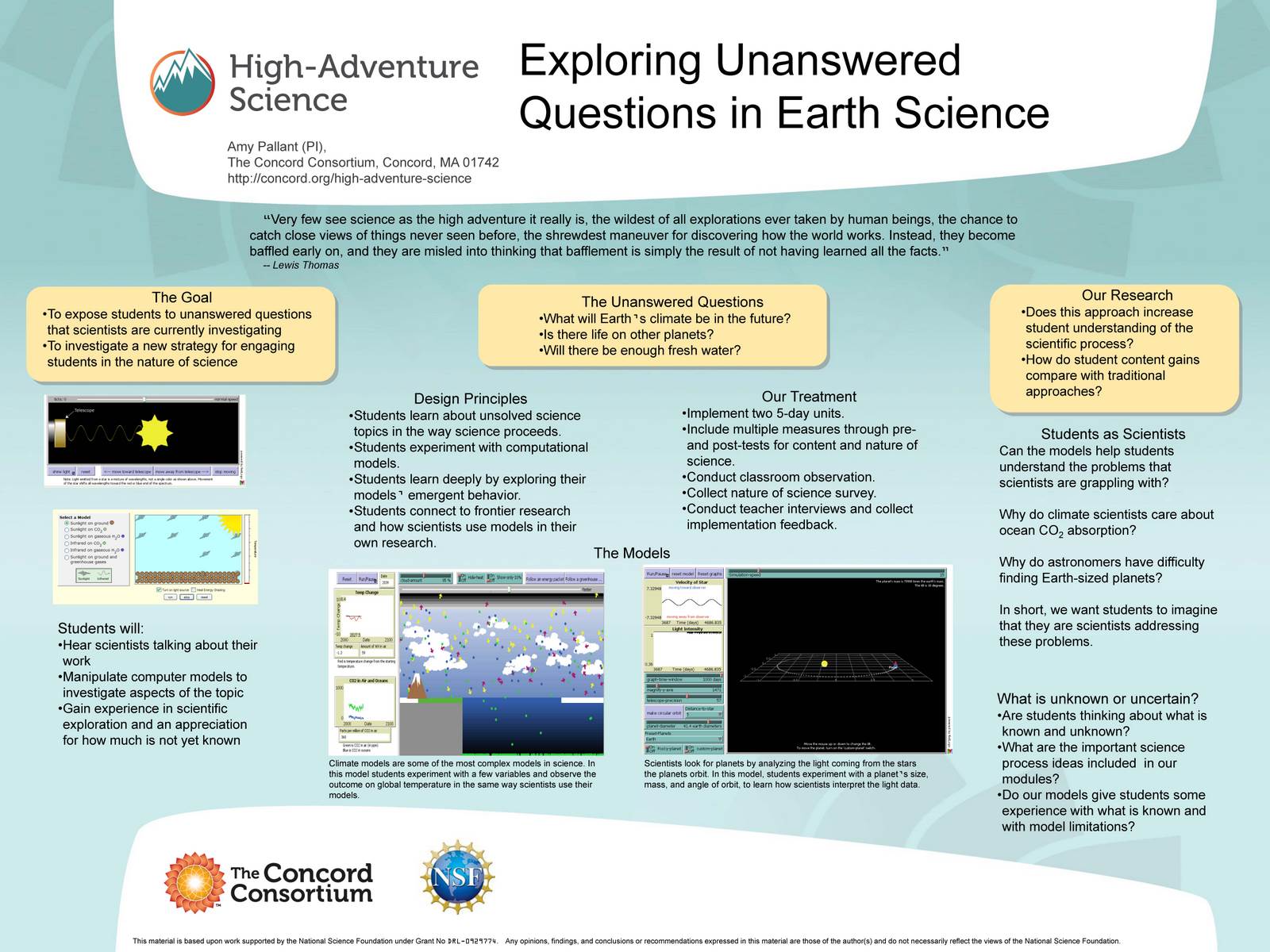
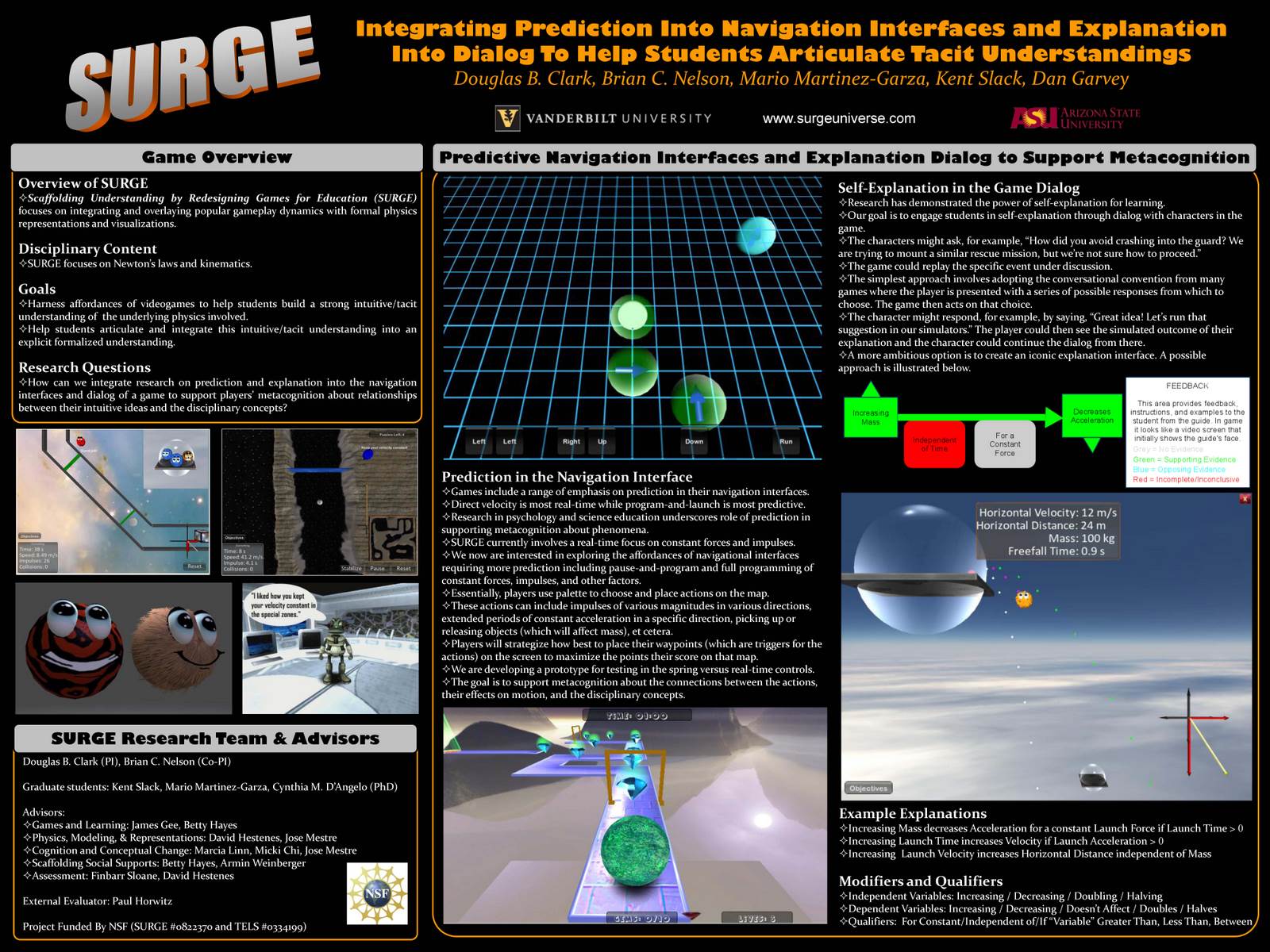
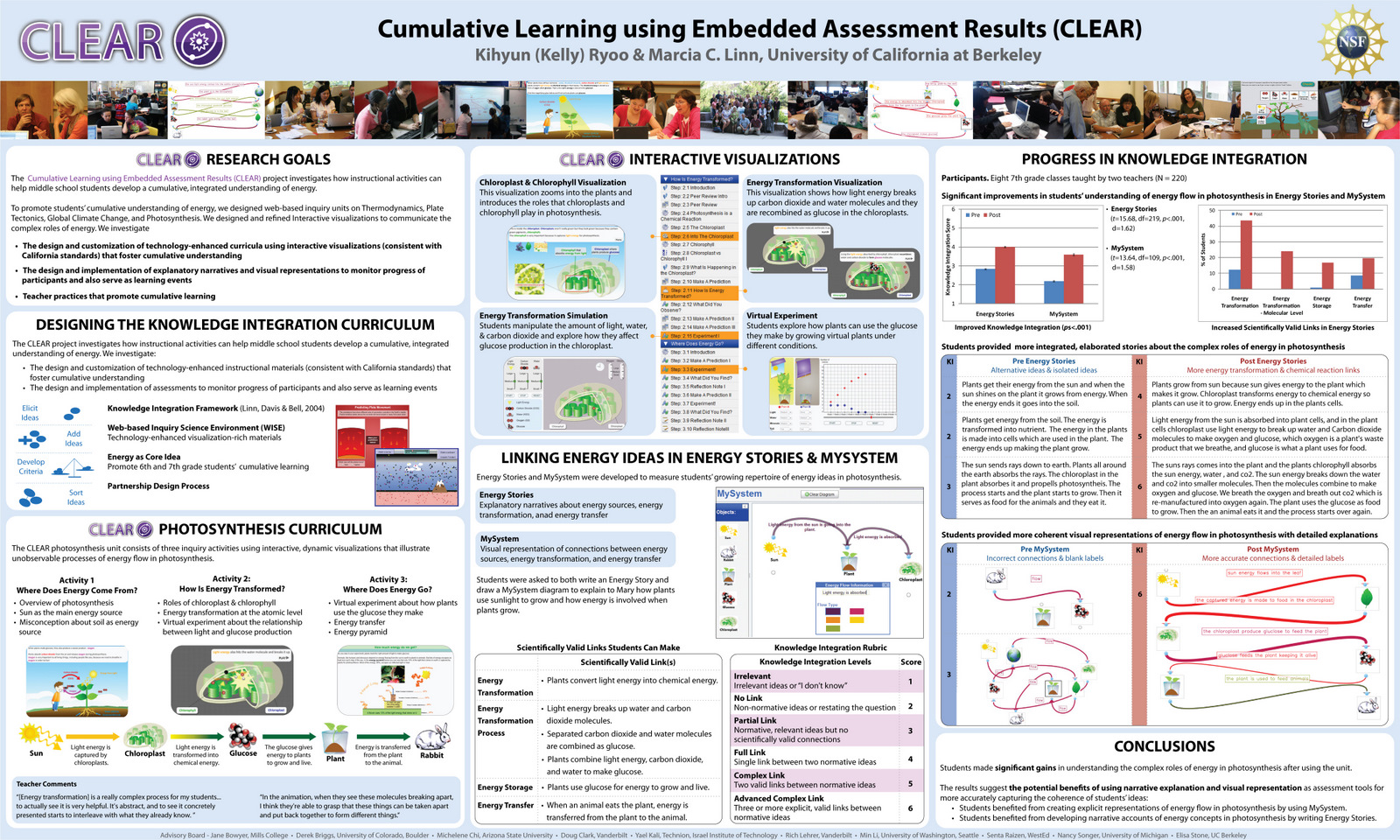
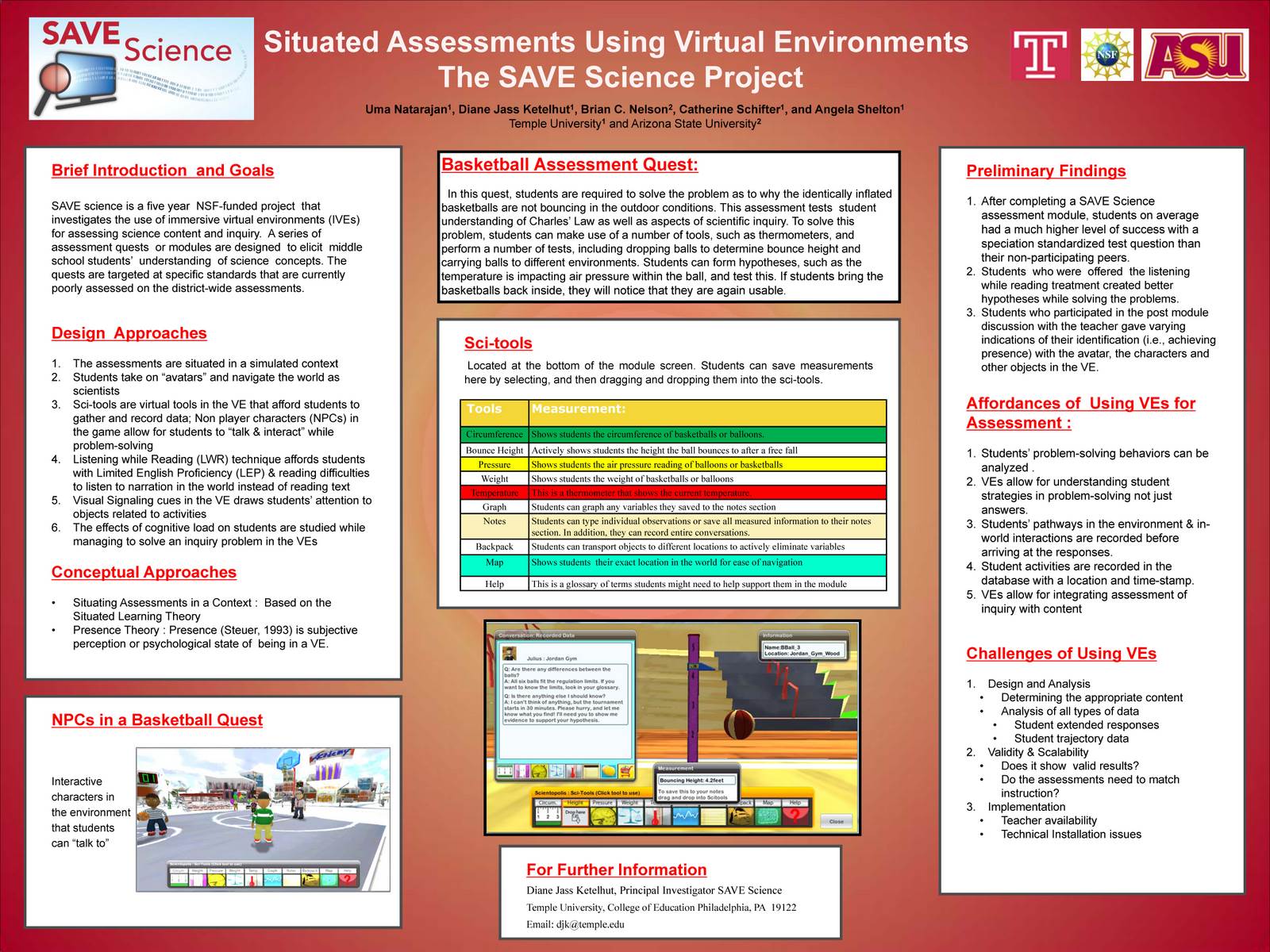
This interactive poster session brings together 12 projects using a range of interactive computer technologies to compare goals, affordances, and challenges across approaches.
This interactive poster session brings together 12 projects using a range of interactive computer technologies to improve science and math learning. The approaches range from interactive simulations to fully-immersive, multi-player games. In addition to increasing communication and collaboration among these researchers, a key goal of this session is to discuss what drives the wide range in approaches to using interactive technologies.
Digital Curricula in Secondary Science: Developing UDL Materials, Envisioning UDL Classrooms
Presenters will discuss the challenges and successes encountered in customizing inquiry science curricula according to the principles of universal design for learning (UDL) and in then enacting those Web-delivered curricula in secondary classrooms.
Digital Science Curriculum Working Group
Open to all grantees
This group will continue to discuss issues related to the development, revision, distribution, and implementation of STEM curricula in the electronic age, and mapping future research in this area.
Deeply Digital Curriculum - The Changing Landscape of Teaching and Learning
Presenters discuss how emerging technology and policy trends may shape the way science curriculum is developed and used in teaching and learning. Participant limit: 25
How should science curriculum developers respond to the changing technological landscape in school and out?
Gaming Arcade
Engage in extended play and in-depth discussion around presenters’ games or virtual environments.
Snow and Global Climate: An Online Course to Facilitate Scientist and Teacher Collaboration
Investigations in Cyber-enabled Education presents an online course designed to facilitate collaboration between scientists and teachers. Participants will explore and provide feedback on course products. Please bring your laptop to participate. Participant limit: 20
This session will showcase and solicit feedback on a prototype online learning community designed to facilitate collaboration between teachers and scientists. A team of scientists and education researchers at the University of Alaska Fairbanks Geophysical Institute developed the learning community as part of the Investigations in Cyber-enabled Education (ICE) Program, a DR K–12 program. The unique learning community is the central component of an online course for secondary teachers.