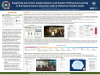
Specifying Equity in Practice: A Focus on Ambitious Mathematics and Science Teaching

Day
Thu

Three projects report findings about supporting mathematics and science teachers’ development of ambitious teaching and focus analyses on equity perspectives related to students’ opportunities to learn.

Date/Time
-
Session Type
PI-organized Discussion

In this session, presenters from three projects seek to elaborate teaching practices in mathematics and science that support the development of central mathematical or scientific ideas and result in significant learning opportunities for students. More specifically, they seek to ground a larger conversation about equity in mathematics and science education in the sharing of specific analyses of their work. All three presentations focus on supporting teachers’ development of ambitious (rigorous and equitable) instructional practices.

PARCC Assessments

Day
Thu

This session provides an overview of the design of the PARCC assessments and describes the research studies and resources PARCC has or plans to develop to support the implementation of the Common Core State Standards (CCSS).* This is a one-hour session with the option to remain in the room for informal discussion after the presentation.

Date/Time
-
Session Type
Other

The Partnership for the Assessment of College and Career Readiness (PARCC) is a consortium of 24 states that received a Race to the Top Assessment Grant from the U.S. Department of Education in the fall of 2010 to build a next-generation student assessment system. The assessments will be based on the Common Core State Standards (CCSS) for English Language Arts/Literacy and Mathematics and target students in grades 3–11.

Effective Computer-Based Curricula

Day
Thu

What have we learned about designing computer-based materials that transform science education? What do we need to investigate? How can we collaborate to stimulate change?

Date/Time
-
Session Type
PI-organized Discussion

Synopsis
How can we sustain and improve our innovations to promote lifelong science learning? What have we learned about designing computer-based materials that transform science education? What are open questions and promising directions? How can we collaborate to stimulate change? What strategies and revenue streams will lead to sustainability of promising innovations?

Crossroads: Vexations and Ventures of Current DR K-12 Projects

Day
Thu

Presenters describe struggles with sustaining science teacher professional development across remote sites and explore simulation training of science educators beyond one institution’s existing capacities.

Date/Time
-
Session Type
Other

For a description of the Crossroads session structure, please see the initial Crossroads session.

Engineering SIG

Day
Thu

(Open to all grantees)

This group discusses current research and practice in K-12 engineering education and issues related to content and delivery.

Date/Time
-
Session Type
Special Interest Group (SIG)

Embedded Formative Assessment: A New CADRE Work Group

Day
Thu

(Open to all grantees who might commit to the work group activities during 2012)

CADRE invites you to join a newly established group on embedding formative assessment into STEM education curricula and materials.

Date/Time
-
Session Type
Special Interest Group (SIG)
Facilitators
References

CADRE invites participants to join a newly established work group on embedding formative assessment into STEM education curricula and materials. This session is intended for individuals who may be interested in committing a day or two to group work this year. The group discusses topics for focus, procedures that maximize knowledge building while minimizing burden, and a vision for a group product. The group explores tapping outside and DR K–12 expertise for the work.

Data Games: Can Data Modeling Improve Strategies and Mathematical Understanding?

Day
Thu

Presenters seek feedback on activities, now in field test, in which students build mathematical and statistical models to improve their game-playing strategies. Bring a laptop.

Date/Time
-
Session Type
Product Feedback Session

Participants are invited to play online games embedded in a data-analysis environment, analyzing their game data to improve their strategy. The structure follows an abbreviated version of classroom activities that presenters are now field testing. Product release is scheduled to begin in fall 2012. (Participants should bring a laptop computer that can connect with conference wifi.) With each game-based activity, subsequent discussion focuses on different issues about which presenters would like feedback.

Using Scientific Data Sets to Teach STEM Topics, Support Student Learning, and Develop an Understanding about the Nature of Science

Day
Thu

The session provides an overview of and stimulates discussion about current DR K-12 projects initiating STEM classroom uses of scientific data sets using geospatial technologies and data visualizations.

Date/Time
-
Session Type
PI-organized Discussion
Session Materials

The purpose of this session is to engage participants in discussing and sharing strategies for designing classroom uses of data sets and visualization technologies, including large archives and portals of geospatial data sets, data from field sites, Web-based graphing and data analysis tools, and technologies that simulate a field environment. Each of these technologies and data sets is tied to curriculum and instructional resources.

Using Analysis of Practice to Improve Science and Mathematics Teaching: Ways to Support and Study Teacher Learning

Day
Thu

This session examines different approaches to engaging mathematics and science teachers in analysis of practice (e.g., using video, student work, and online tools) and different strategies for assessing impact of this work.

Date/Time
-
Session Type
PI-organized Discussion
Session Materials

There is much support for embedding teachers’ professional learning in the analysis of practice. This approach can engage teachers in deepening both their content knowledge and pedagogical knowledge in more meaningful contexts than typical courses or professional development workshops. The purposes of this session are (1) to examine four different approaches to analysis of practice in professional development work with mathematics and science teachers and (2) to consider the affordances and constraints of different strategies for assessing the impact of these approaches.

The Teacher's Role in Game- & Simulation-based Learning

Day
Thu

A 2011-12 CADRE Fellows presentation

The panel presentation addresses the role of the teacher in online, game- and simulation-based learning. 

Date/Time
-
Session Type
Working Group

This panel presentation showcases various NSF DR K–12 projects (Data Games, Evidence Game, MathSnacks, PhET, and TESLA) and the role of the classroom teacher in these project-related online, game-, and simulation-based learning environments. The session presenters highlight the envisioned role teachers play when implementing each game or simulation project. Presenters also discuss how the vision of the teacher’s role has evolved during the life of some of the projects.