Sensing Science through Modeling: Developing Kindergarten Students' Understanding of Matter and Its Changes

Principal Investigator:

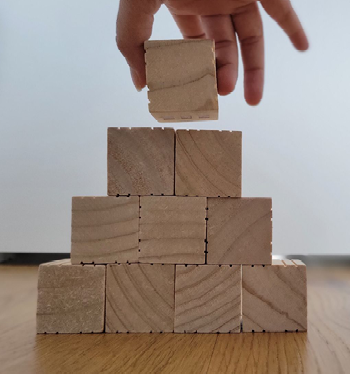
The Sensing Science through Modeling Matter: Kindergarten Students’ Development of Understanding of Matter and Its Changes project has developed and researched a technology-enriched curriculum to support learning about matter and its changes at the kindergarten level. Traditionally, particle-based worlds are introduced in upper elementary school when children already hold incorrect ideas that are difficult to change. Early learners have significant—and highly untapped—potential for understanding abstract concepts and reasoning in sophisticated ways.

Click image to preview:
Target Audience:

Case Studies of a Suite of Next Generation Science Instructional, Assessment, and Professional Development Materials in Diverse Middle School Settings

Principal Investigator:

Our learning approach, eco-solutioning, emphasizes learning 3D environmental content through the construction of solutions that have an impact with and on the local environment. Project goals include the design, implementation, and evaluation of a Next Generation Science Standards (NGSS) curricular unit delivered through Gooru’s Learning Navigator data backbone system where middle school student learning is used towards local environmental solutions such as increasing local populations of native insects.

Co-PI(s): Michelle Newstadt, Gooru.org

Click image to preview:
Discipline/Topic:
Target Audience:

Supporting Teachers in Responsive Instruction for Developing Expertise in Science (Collaborative Research: Riordan)

Principal Investigator:

With the increasing use of online interactive environments for science and engineering education in grades K-12, there is a growing need for detailed automatic analysis of student explanations to provide targeted and individualized guidance. In this work we describe a process of human annotation of student ideas based on deconstructed holistic scoring rubrics for knowledge integration in science learning and develop new NLP methods for identifying diverse expressions of student ideas and reasoning.

Click image to preview:
Target Audience:

Next Directions in Measurement of the Home Mathematics Environment: An International and Interdisciplinary Perspective

Yemimah A. King (2019-20 CADRE Fellow), Leanne Elliott (2020 CADRE Postdoc), and David J. Purpura (CAREER Awardee) were co-authors on this recent Journal of Numerical Cognition paper synthesizing findings from an international NSF-funded virtual conference focused on the home mathematics environment.

Preparing Next Generation Scientists Through Teacher and Extension Science Partnerships and Schoolyard Citizen Science Investigations in Elementary Schools

Principal Investigator:

Research shows a need for professional development (PD) that builds K-5 teachers' ability to incorporate the Next Generation Science Standards (NGSS) science practices into the classroom and supports their implementation of reform-minded science instruction. The Schoolyard SITES research study and PD program at the University of New Hampshire (UNH) partners elementary teachers with UNH Extension science volunteers to bring locally-relevant citizen science projects to elementary students and to increase teachers’ self-efficacy teaching science.

Click image to preview:
Target Audience:

Measuring Early Mathematical Reasoning Skills: Developing Tests of Numeric Relational Reasoning and Spatial Reasoning

Principal Investigator:

The MMaRS project is designing classroom assessment resources of numeric relational reasoning and spatial reasoning for students in grades K-2. During the pandemic, SMU researchers worked virtually with teachers and K-2 students to develop resources that are responsive to their needs and accurately elicit their reasoning. This poster will highlight the virtual data collection methods and techniques, including think aloud video interviews with students and prototype co-design work sessions with teachers.

Click image to preview:
Target Audience:

Mathematical Learning via Architectural Design and Modeling Using E-Rebuild

Principal Investigator:

This poster presentation will introduce the current study findings governing the design and implementation of E-Rebuild, a 3D architecture and math game that aims to promote versatile representation and epistemic practice of mathematics for students in grades 6th-8th. Utilizing the real-time, evidence-centered in-game learning assessment and a game-level editor, E-Rebuild enables not only problem-based mathematical thinking and learning, but also adaptive learner support during gameplay and participatory design of game-based math problems.

Click image to preview:
Target Audience:

Integrating Science with Mathematics and Engineering: Linking Home and School Learning for All Young Learners

Principal Investigator:

This study investigates the integration of early science with mathematics and engineering and involves co-designing resources with preschool teachers and families from historically underserved communities to provide preschool children equitable STEM learning experiences. The study also explores connections between home and school learning and involves designing resources to support multilingual learners, who represent a large (and growing) proportion of the population served in public preschool programs.

Click image to preview:
Target Audience:

Incorporating Professional Science Writing into High School STEM Research Projects

Principal Investigator:
Description: Reading, writing, revision and even publication are integral to progressing science. Yet, these skills are not emphasized in the typical high school STEM classroom. This project investigates the experiences and outcomes of secondary students who have participated in the peer-review and publication of their STEM research projects. Overall, students report increased understanding of the role of writing and publication within science, and they express higher levels of self-efficacy, confidence and identity in STEM.
Click image to preview:
Target Audience: