I'd also like to thank our PI meeting advisors for their invaluable contributions during the planning process: Jodi Asbell-Clarke, Amy Brodesky, Doug Clark, Tutita Casa, Dan Damelin, Jim Diamond, Cathy Kinzer, Magaly Lavadenz, Emily Moore, and Amy Parks.
New DR K-12 Awardees
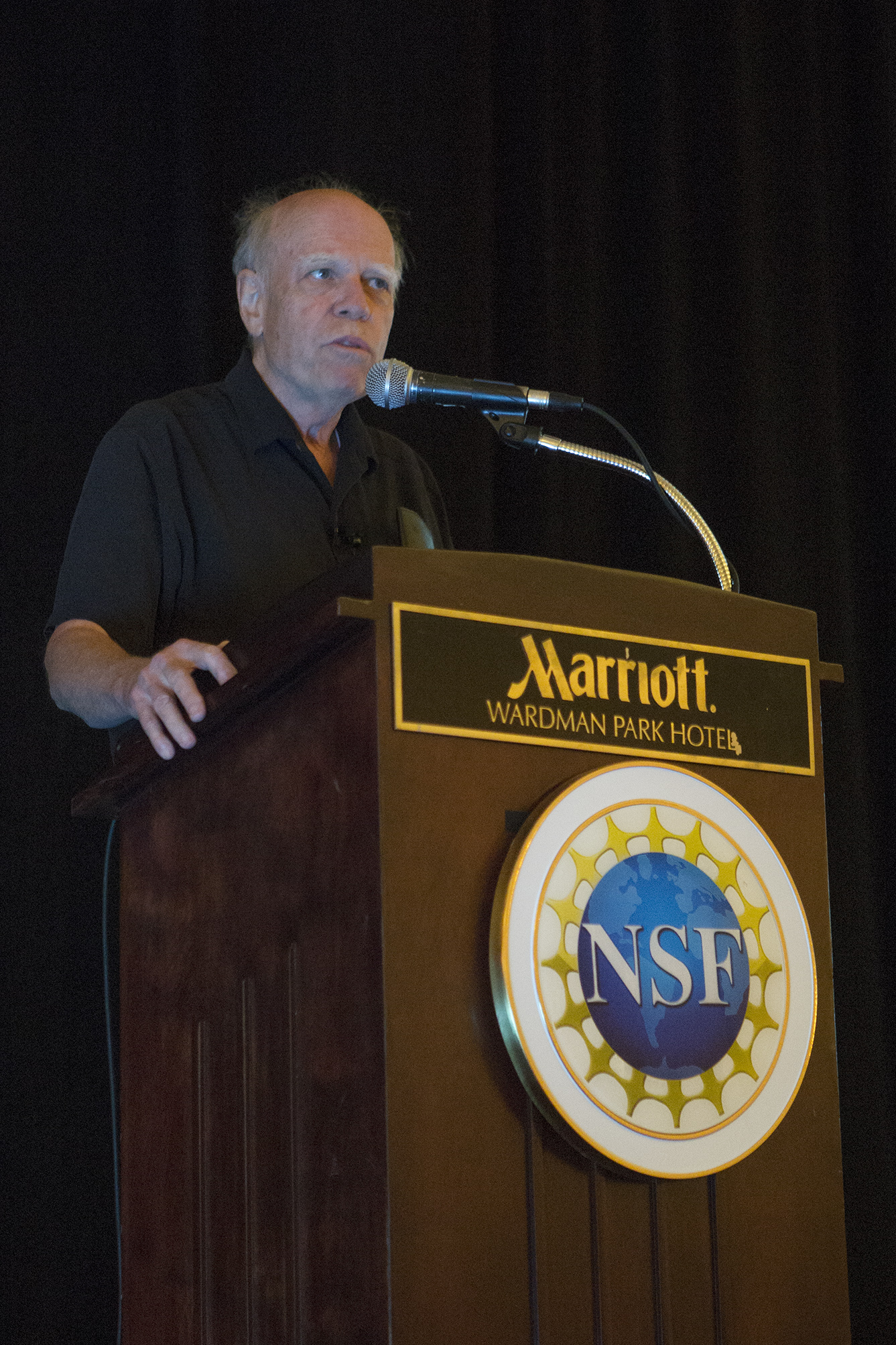
Session Information & Materials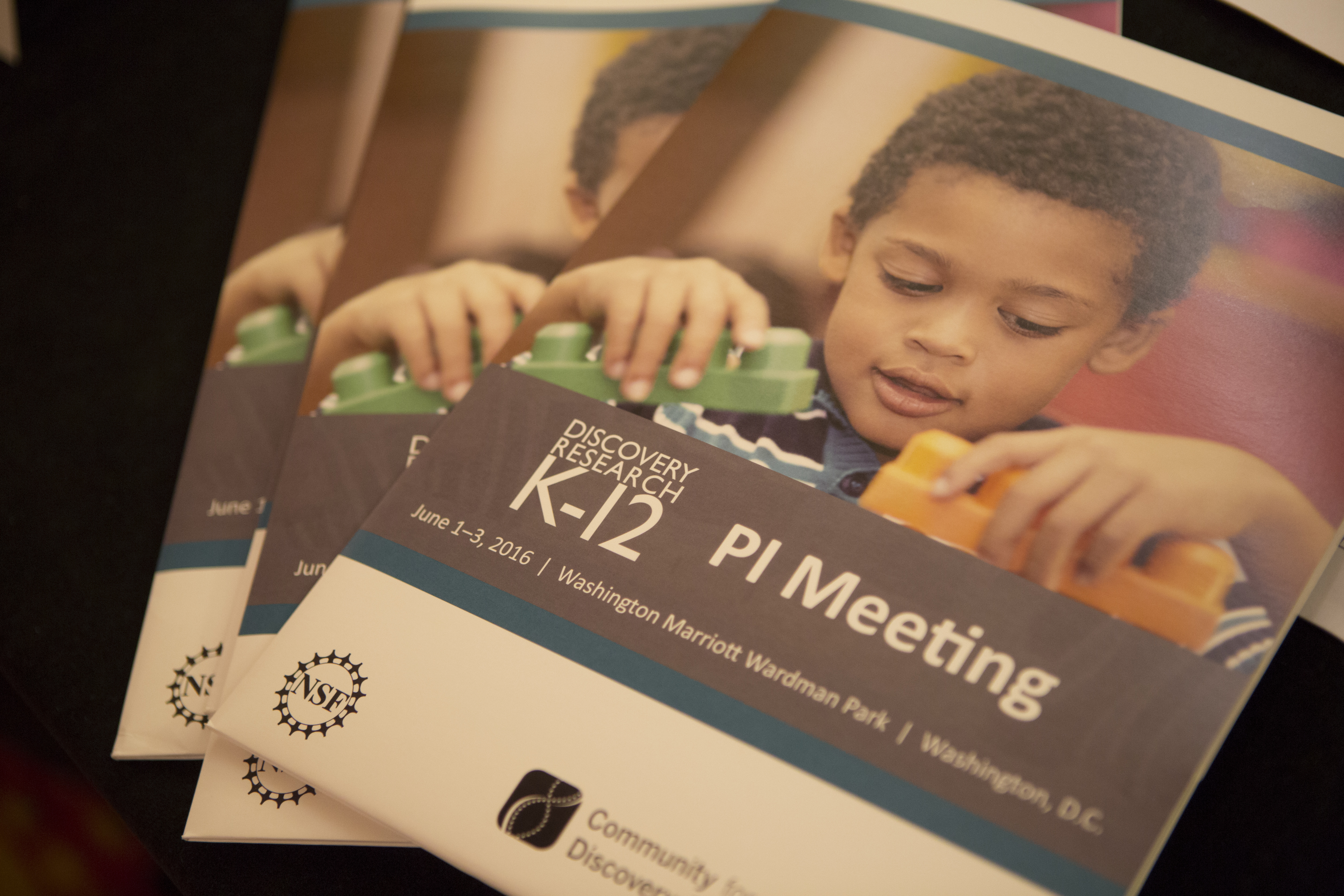
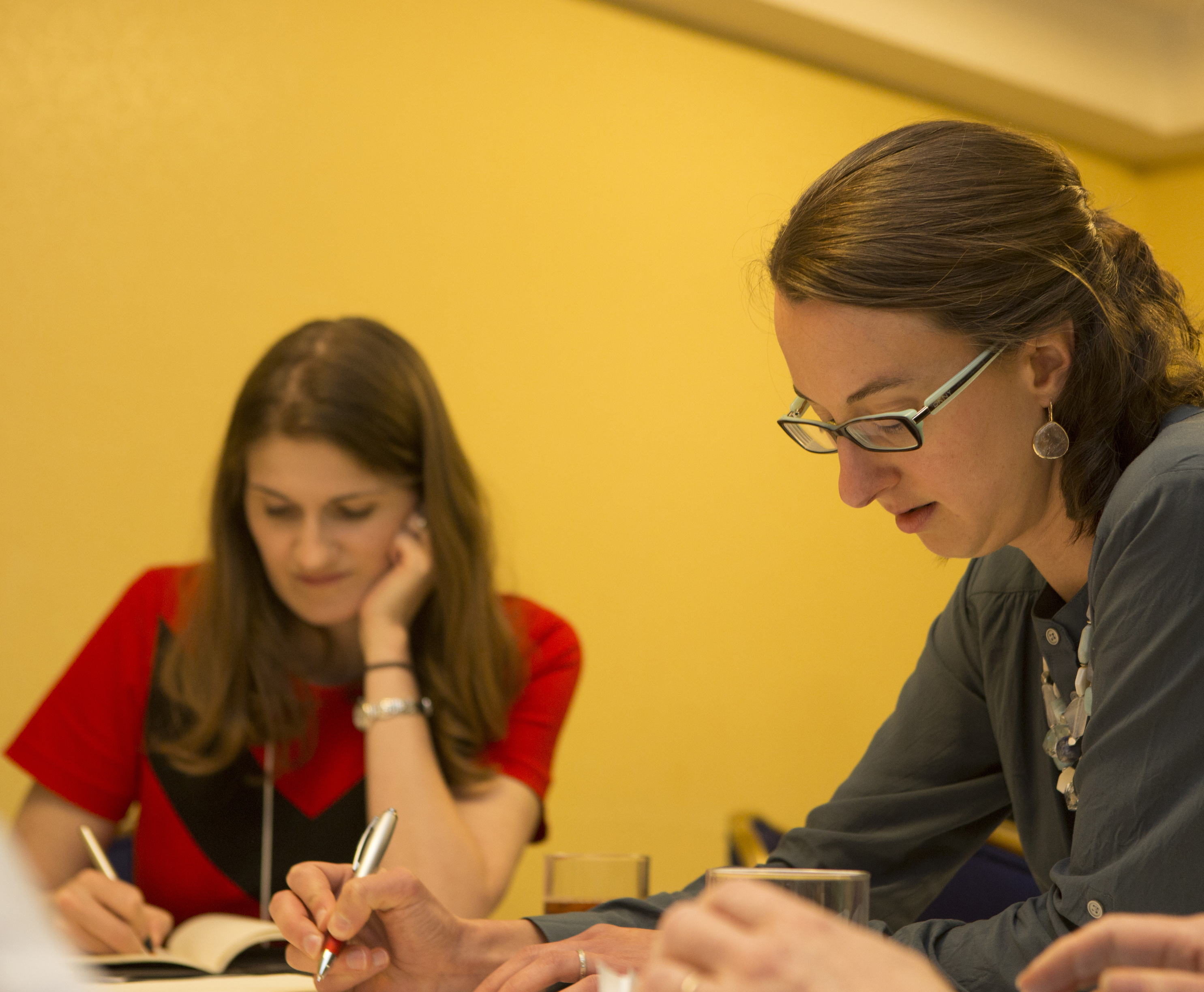
Early Career Activities
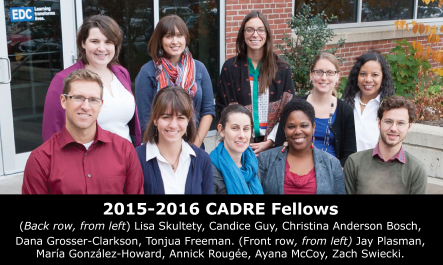
NSF CAREER Awardee Pre-Session
Disseminating with Video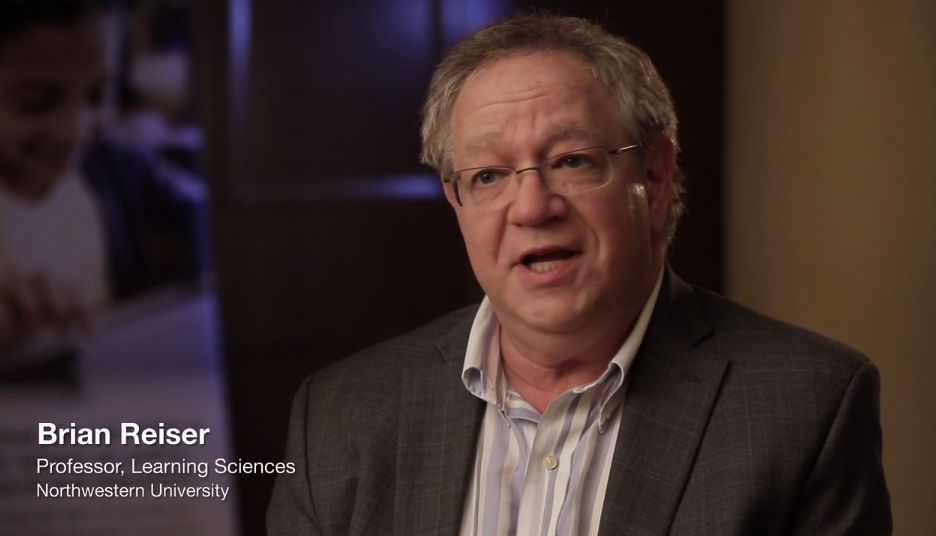
NSF STEM for All Video Showcase
DR K-12 Video Blog
We're pleased to share this quarter's news from DR K-12 projects and people, as well as our sister resource networks who serve other NSF funding programs (ARC, CAISE, CIRCL, MSPnet, and STELAR). In addition to our newsletter digest, we disseminate your news items on our website and social media. Let us hear from you!
- Explaining Ramps With Models
In the Press | Todd Campbell and Drew Neilson share strategies for engaging students in using models. - How Did Science Teachers Address Ebola? And How Will They Respond to Zika?
In the Press | Edweek highlights the work of Stopping an Epidemic of Misinformation: Leveraging the K-12 Science Education System to Respond to Ebola and their recent report on educators' responses to the recent Ebola outbreak. - The Impact of Edtech: In Conversation with Kathy Perkins
In the Press | Learnography's Kate Salmon sat down with Kathy Perkins at SXSWedu to talk about the PhET project and her work with simulations in education. - Librarian Approved: 30 Ed-Tech Apps to Inspire Creativity and Creation
In the Press | Scratch and ScratchJr made Mind/Shift's list of 30 ed-tech apps recommended by librarians. - My Writing Productivity Pipeline
In the Press | Erin Furtak shares how she keeps her writing efforts organized and productive as an associate professor. - Using Creativity to Boost Young Children's Mathematical Thinking
In the Press | In this Mind/Shift article, PI Heather Hill shares her perspective on supporting creativity in the math classroom. - Constructing Assessment Tasks that Blend Disciplinary Core Ideas, Crosscutting Concepts, and Science Practices for Classroom Formative Applications
Publication | Christopher Harris, Joseph Krajcik, James Pellegrino, and Kevin McElhaney describe how they use principles of evidence-centered design to develop classroom-based science assessments that integrate three dimensions of science proficiency. - Engaging in Science: A Feeling for the Discipline
Publication | Lama Jabera and David Hammer argue for cultivating students' feelings and motivations within the science discipline. - Evaluation and Impact of Educational Games in Math
Publication | In recent publications, Math Snacks 1) reviews methodologies used to determine the effectiveness of games and animations for learning; and 2) shares findings from a study measuring the effect of four games on students' understandings of ratios, coordinate plane, and number. In a related TEDx Talk, PI Karin Wiburg suggests a radical redesign of teaching and organizing mathematics curriculum. - The Feedback Loop: Using Formative Assessment Data for Science Teaching and Learning
Publication | Erin Furtak, Howard Glasser, and Zora Wolfe describe a process for designing formative assessments and using a variety of data to improve science teaching. - Teacher Learning in the Digital Age
Publication | A number of DR K-12 awardees contributed to this book (as editors and authors), which examines exemplary models of online and blended teacher professional development. - The Theoretical and Empirical Basis of Teacher Leadership: A Review of the Literature
Publication | Julianne Wenner and Todd Campbell compiled a literature review about what it means to be a teacher leader. - Engineering for Every K-12 Student
Report | A recent report from Massachusetts Engineering Innovation and Dissemination Community (MEIDC) provides a landscape analysis of K-12 engineering education in the Greater Boston region. Catherine McCulloch reflects on highlights from the report in her blog post: Elevating and Enhancing the "E" in STEM Education. - Learning About New Demands in Schools: Considering Algebra Policy Environments (LANDSCAPE)
Report | Michael Steele, Janine Remillard, John Baker, Lindsay Keazer, and Beth Herbel-Eisenmann share findings from an NSF-funded study on the policies, practices, and perceptions related to Algebra I in school districts across the U.S. - New EDC Website Deepens Understanding of Infectious Diseases
Website | The Online Resources for Educating Students about Ebola and Other Emerging and Re-emerging Infectious Diseases project has launched infectionsdiseases.edc.org, with modules and resources to support exploration and understanding of infectious disease epidemics.
Email cadre@edc.org to share news from your project.
News from NSF Networks
- Cyberlearning 2016: Designing for Deeper, Broader, and More Equitable Learning
The NSF Cyberlearning conference took place June 3-5 in Washington, D.C. Webcast recordings of keynotes and special speakers; a Storify review of the event in tweets; and a blog post reflecting on the event are all available on circlcenter.org. - ITEST Proposal Development Resources
The STELAR website offers a collection of resources related to the ITEST program and solicitation, preparing your proposal, developing a robust research design, creating an effective evaluation strategy, connecting with partners, reaching underserved populations, and developing the workforce of the future. - MSPnet Blog: "Jerome Bruner"
In his latest blog post, Brian Drayton reflects on the life of Jerome Bruner and his contributions the "cognitive revolution." - New Informal Science Articles from CAISE "Edit-aThon"
Following the Research Meeting on Making and Learning, CAISE held a one day working meeting to create new content for the informalscience.org Knowledge Base. The meeting generated 10 new articles on topics including assessment in informal science, facilitating makerspaces, equity in making, and design-based research. - Next Generation STEM Learning for All: Envisioning Advances Based on NSF Supported Research
In November 2015, STELAR, CIRCL, and CADRE worked together to organize an NSF-funded STEM Forum on Next Generation STEM Learning for All, which engaged a range of stakeholders in examining challenges and successes in STEM education. This report presents important takeaways from the Forum.
- August 10 (Proposal) - Innovative Technology Experiences for Students and Teachers (ITEST)
- August 16 (Letter of Intent) - Improving Undergraduate STEM Education: Pathways into Geoscience (IUSE: GEOPATHS)
- September 8 (Proposal) - EHR Core Research (ECR)
- September 11 (Application) - Improving Education and Reducing Inequality in the United States
- September 13 (Proposal) - Spencer Midcareer Grant Program
Publication
For other opportunities, see CADRE's List of STEM Education Publications (PDF).
- September 1 - The Science Teacher | Theme: Evolution
- October 1 - Phi Delta Kappan | Theme: Black Student Learning Matters
- October 1 - The Science Teacher | Theme: Engaging in Argument from Evidence
- October 3 - Educational Leadership | Theme: Getting Personalization Right
- Ongoing - Postdoctoral and Graduate Fellowships on AERA Job Board
- August 19 - Search for Division Director for NSF's Division of Undergraduate Education
- September 6 - Robert Noyce Teacher Scholarship Program
Share with DR K-12 Colleagues
If you are PI or Co-PI on a DR K-12 grant, we encourage you to share this newsletter with your colleagues. Many of our news items, resources, and events may be of special interest to others on your project team, e.g., early career researchers and developers, evaluators, communication specialists, etc. We welcome all as part of our DR K-12 community and invite them to subscribe to this newsletter, join us on social media, and create an account on the CADRE website.
Subscribe | Create CADRE Account
Help Us Improve!
Let us know how we can improve our communications by completing a short survey.