
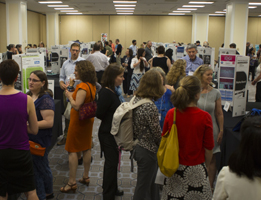
This project explores how immersive field science experiences and carefully designed digital resources can help secondary teachers make science more engaging and relatable for students. The research team will study how teachers incorporate what they learn from real-world science experiences into their classroom teaching and whether online materials can replicate some of the same benefits. By improving both immersive and digital professional learning experiences, the project aims to increase access to and decrease the cost of high-quality instructional supports, especially for teachers who cannot attend traditional field-based learning.
Projects
To find a project on this archived website, we suggest searching the web for “site: cadrek12.org” along with keywords related to the item or topic of interest.
Sort By:
Start Date: Most Recent | Oldest
Alphabetical: A>Z | Z>A
10/01/2025
Rapid changes in computing, especially with advances in artificial intelligence, are reshaping the future needs of society and the demands on the STEM workforce. More than ever, computer science (CS) education is critical for all children. Many schools are looking for ways to introduce CS skills and thinking in the elementary grades. Whereas some initiatives have focused on coding as its own endeavor, not integrated with subjects like mathematics, science, or literacy, developers and researchers are increasingly exploring ways that programming and computational thinking (CT) can be integrated into core content. This project will design and study resources that build teacher capacity to integrate CS/CT into mathematics by building on the investigators' prior work developing integrated Math+CS modules in grades 2-5.
10/01/2025
The goal of this project is to build teacher capacity for integrating computational thinking (CT) into grades 6–8 science classrooms. The project will support teacher professional vision and adaptive expertise for CT-infused instruction through instructional coaching, professional development workshops, and an online professional learning community. These efforts aim to empower teachers to design, enact, and adapt CT-integrated lessons that foster students’ positive attitudes toward science and enhance their knowledge of science and CT.
10/01/2025
The goal of this project is to build teacher capacity for integrating computational thinking (CT) into grades 6–8 science classrooms. The project will support teacher professional vision and adaptive expertise for CT-infused instruction through instructional coaching, professional development workshops, and an online professional learning community. These efforts aim to empower teachers to design, enact, and adapt CT-integrated lessons that foster students’ positive attitudes toward science and enhance their knowledge of science and CT.
09/15/2025
Scientific sensemaking is core to learning and doing science. Oral and written language, visual and numerical representations, physical models, and other forms of communication are vital to scientific sensemaking, yet research has not yet fully explored how science curricula can be customized to account for the unique communicative repertoires of individual learners within elementary science classes. This project will address this important gap in practice by developing a suite of tools that elementary teachers can use to customize existing open-source, standards-aligned science curricula, such that these curricula are better able to support students with a range of communicative strengths, including multilingualism.
09/15/2025
As artificial intelligence (AI) becomes increasingly embedded in the technologies used by both students and teachers, it is essential for them to understand how to be safe while using AI. Furthermore, AI and cybersecurity technology together are better at detecting malicious activities than conventional security systems. The need to blend the two disciplines into a single, integrated curriculum for K-8 education is highlighted by the interconnectedness of AI and cybersecurity as complementary systems. This project will "plant the seeds" of these literacies by spiraling content on topics from computer programming, internet fundamentals, and introduction to data and AI along with cybersecurity topics in small doses throughout students' K-8 education. This project will lay the foundation for the students to eventually develop a comprehensive understanding of how different technologies work and interact.
09/15/2025
This project addresses the critical need for improved mathematics education of elementary teachers and their students by preparing and supporting Elementary Mathematics Specialists (EMSs) who are highly effective mathematics teachers and teacher leaders. The program provides these EMSs with professional development grounded in research-informed practices and focuses on refinement of an existing program. The project aims to develop ambitious, responsive mathematics instruction and to provide high-quality coaching to teacher candidates and novice teachers.
09/15/2025
As artificial intelligence (AI) becomes increasingly embedded in the technologies used by both students and teachers, it is essential for them to understand how to be safe while using AI. Furthermore, AI and cybersecurity technology together are better at detecting malicious activities than conventional security systems. The need to blend the two disciplines into a single, integrated curriculum for K-8 education is highlighted by the interconnectedness of AI and cybersecurity as complementary systems. This project will "plant the seeds" of these literacies by spiraling content on topics from computer programming, internet fundamentals, and introduction to data and AI along with cybersecurity topics in small doses throughout students' K-8 education. This project will lay the foundation for the students to eventually develop a comprehensive understanding of how different technologies work and interact.
09/15/2025
This project addresses a crucial need in K-12 science teacher education to respond to local school district needs for high-quality science teaching and the role of teacher education programs to develop programs that provide prospective teachers the best opportunity for success as science teachers. Specifically, the project aims to advance science teacher education by applying a pragmatic, iterative approach to developing teacher education program resources and tools that will support the implementation of evidence-based STEM teaching and learning practices in K-12 science classrooms. The project will identify evidence-based STEM teaching and learning practices through a systematic review of K-12 STEM education research and resources. Rather than generate new evidence, the project leverages the evidence that already exists to support educators in adapting and sustaining existing high-quality practices that have already demonstrated positive impacts on students' STEM learning.
09/15/2025
Scientific sensemaking is core to learning and doing science. Oral and written language, visual and numerical representations, physical models, and other forms of communication are vital to scientific sensemaking, yet research has not yet fully explored how science curricula can be customized to account for the unique communicative repertoires of individual learners within elementary science classes. This project will address this important gap in practice by developing a suite of tools that elementary teachers can use to customize existing open-source, standards-aligned science curricula, such that these curricula are better able to support students with a range of communicative strengths, including multilingualism.
09/15/2025
Disengagement from mathematics during middle and high school is a widespread concern that contributes to lower academic achievement and diminished long-term participation in STEM fields. Research shows that students' beliefs about their ability to grow and improve—often referred to as growth mindsets—can significantly enhance motivation, persistence, and performance. However, classroom environments and teacher practices play a critical role in shaping these beliefs. This project evaluates a professional development program, Fellowship Using the Science of Engagement (FUSE), designed to help 6th through 9th grade math teachers adopt instructional practices that foster growth mindset-supportive learning environments. The program provides teachers with research-based insights into adolescent development, structured opportunities to revise their instructional language and feedback practices, and personalized guidance through AI-supported coaching. The study examines whether the FUSE program improves teacher mindsets, communication practices, and well-being, and whether these changes lead to increased student motivation, improved perceptions of classroom climate, and higher performance on state mathematics assessments.
09/01/2025
This project synthesizes research on teacher learning to distill ideas and develop a new, deeper understanding of how preK-12 teacher professional learning in mathematics and science influences teacher beliefs, knowledge, and practice. This study will provide information that enables states, districts, and schools to elevate the quality of teacher professional learning in STEM to lead to more effective instruction that fosters more and better STEM student engagement and learning and motivates more students to choose STEM careers.
09/01/2025
Preschool and kindergarten-aged children are still developing the skills needed to reflect on and manage their own thinking, a process often referred to as metacognition. Without strategic support from their teachers, young children may struggle to make sense of inquiry-based science activities and possibly form enduring misconceptions that may hamper future science learning. Yet, many teachers are unfamiliar with the metacognitive processes or how to intentionally facilitate their development. This project explores both how to improve early childhood teachers' understanding of metacognition and develop strategies to guide teachers in using language and feedback to more effectively support emerging metacognition and science learning in young children.
09/01/2025
Given the national priority for America's leadership in science, there is a need to strengthen the quality of teaching and learning in science classrooms. This conference brings together researchers, practitioners, curriculum developers, and policymakers to chart the future of curriculum-based professional development (CPBL) in science education. CBPL is an approach that uses high-quality curricular materials as a catalyst for teacher learning. Presently, the field is not clear about how teachers learn from these well-designed materials and what other supports might be necessary. This conference aims to address pressing questions about how high-quality materials can drive teacher learning, how materials should be designed to support teacher learning trajectories, how CBPL can promote high quality science education, and what organizational supports are needed for successful implementation. Through structured collaboration among stakeholders, the gathering will consolidate existing work and generate concrete plans for advancing both research and practice in ways that honor teacher professionalism while supporting student learning in science.
08/01/2025
The rapid onset of AI, and generative AI tools such as LLMs, amplify the need for AI literacies, including concepts, practices and ethics, for K-12 schools. Some AI literacy resources, such as AI4K12 and AI4ALL, have emerged, but it may be challenging for schools, particularly those in small districts, to navigate these resources. Furthermore, researchers need further guidance on how to support schools for AI literacy. These challenges for schools and researchers include how to coordinate planning across teachers, school leaders and researchers, how to implement across grade levels, classrooms, and content areas; how to provide training and preparation time to support lesson design and implementation; and how to support teachers in their own AI literacy. To address these needs, district leaders and teachers from Forest Park School District and researchers from the University of Illinois Chicago will engage in a one-year research practice partnership development to build a long-term RPP, co-design an AI literacy curriculum, and support professional development to implement the curriculum.
12/15/2024
Socio-environmental issues are both a key to secondary student interest in science and a difficult terrain for teachers to navigate. Problems like climate change have not only scientific but also social, political, and ethical aspects. In order to prepare students for fully understanding such issues, attention needs to be given to how teachers can be supported and learn for effective instruction. This four-year project enacts and researches a teacher professional development program, “Teaching for the Anthropocene,” with middle and high school science teachers that brings a concept of "critical systems thinking." The project investigates how critical systems thinking may enhance teachers’ understanding of socio-environmental issues and support them to integrate those understandings into their curriculum and teaching. The project also identifies potential challenges educators may face as well as what local conditions and program supports help them practically apply critical systems thinking in their classrooms.
12/15/2024
Socio-environmental issues are both a key to secondary student interest in science and a difficult terrain for teachers to navigate. Problems like climate change have not only scientific but also social, political, and ethical aspects. In order to prepare students for fully understanding such issues, attention needs to be given to how teachers can be supported and learn for effective instruction. This four-year project enacts and researches a teacher professional development program, “Teaching for the Anthropocene,” with middle and high school science teachers that brings a concept of "critical systems thinking." The project investigates how critical systems thinking may enhance teachers’ understanding of socio-environmental issues and support them to integrate those understandings into their curriculum and teaching. The project also identifies potential challenges educators may face as well as what local conditions and program supports help them practically apply critical systems thinking in their classrooms.
11/01/2024
Science education research shows that incorporating attention-grabbing concepts and experiences—phenomena—in science classes has the power to engage and inspire young learners. However, many elementary teachers, including those in small rural schools, may not have access to or the support to enact high-quality phenomenon-centered curriculum materials and resources in their science teaching practice. This project aims to address this problem of practice by designing, implementing, and investigating a professional learning approach that supports rural elementary teachers and administrators in incorporating local phenomena-driven science learning experiences in their classrooms.
11/01/2024
Science education research shows that incorporating attention-grabbing concepts and experiences—phenomena—in science classes has the power to engage and inspire young learners. However, many elementary teachers, including those in small rural schools, may not have access to or the support to enact high-quality phenomenon-centered curriculum materials and resources in their science teaching practice. This project aims to address this problem of practice by designing, implementing, and investigating a professional learning approach that supports rural elementary teachers and administrators in incorporating local phenomena-driven science learning experiences in their classrooms.
11/01/2024
Science education research shows that incorporating attention-grabbing concepts and experiences—phenomena—in science classes has the power to engage and inspire young learners. However, many elementary teachers, including those in small rural schools, may not have access to or the support to enact high-quality phenomenon-centered curriculum materials and resources in their science teaching practice. This project aims to address this problem of practice by designing, implementing, and investigating a professional learning approach that supports rural elementary teachers and administrators in incorporating local phenomena-driven science learning experiences in their classrooms.
10/15/2024
Progress in science is motivated and directed by uncertainties. Yet even though uncertainty is a crucial fulcrum for scientific thought, school students are taught science within an overarching assumption that scientific knowledge is certain. This project explores the intellectual leverage of enabling middle school students to experience how scientific work grapples with uncertainty. The overall goal of this project is to understand how teachers can create equitable learning environments for culturally and linguistically diverse learners using Student Uncertainty for Productive Struggle as a pedagogical model in middle school science classrooms.
10/01/2024
Transdisciplinary science integrates knowledge across STEM disciplines to research complex challenges such as climate science, genetic engineering, or ecology. In this project, teachers and students will design smart greenhouses by connecting electronic sensors that can detect light or other environmental data to microcontrollers that can activate devices that water plants and regulate other environmental factors such as temperature or light. This activity brings together engineering, computer science, and horticulture. Working across urban and rural contexts, the project will engage teachers in professional development as they adopt and adapt instructional materials to support their students in learning across disciplines as they build smart greenhouses.
10/01/2024
Mathematical Opportunities in Student Thinking (MOSTs) are high-leverage instances of student mathematical thinking that emerge in whole-class discussions. The challenge for teachers is to build on these opportunities to help the whole class understand the mathematics underlying these student contributions. To help teachers learn how to build on MOSTs, there is a need for professional development resources and tools that facilitators can use. There is also a need for research about how teachers use what they learn in professional development in their teaching. This project is developing a teacher learning sequence that will support teachers in learning to productively use student thinking that surfaces in-the-moment during their instruction—that is, in learning to build on MOSTs.
10/01/2024
Transdisciplinary science integrates knowledge across STEM disciplines to research complex challenges such as climate science, genetic engineering, or ecology. In this project, teachers and students will design smart greenhouses by connecting electronic sensors that can detect light or other environmental data to microcontrollers that can activate devices that water plants and regulate other environmental factors such as temperature or light. This activity brings together engineering, computer science, and horticulture. Working across urban and rural contexts, the project will engage teachers in professional development as they adopt and adapt instructional materials to support their students in learning across disciplines as they build smart greenhouses.
10/01/2024
Providing computer science (CS) education to students prior to high school is critical for catalyzing their interest in CS and closing achievement and development gaps. However, the retention rate for underrepresented group participants in middle school CS teacher preparation programs is lower than that for their peers. The resulting lack of diversity in CS teachers contributes to students’ inequitable access to quality middle school CS education. In this project will investigate effective design and implementation strategies of CS teacher preparation programs aimed to increase the number of middle school CS teachers from underrepresented groups.